After Action Review - Hürtgenwald Tough - 2026
Introduction
On October 10th, Ruckpack NRW had planned the “Hürtgenwald Tough” - I had planned to attend, but after 5 weekends away from home and a difficult week at work, I was unsure whether I’d feel like making the trip - then, Friday arrived and after returning home from work I thought, “ruck it - let’s go”. I had contacted Christian, who’d be the Cadre for the event, to tell him that I was considering to take the 6-hour car ride to the Eifel and to ask whether others had registered (only two or three people had indicated participation on Sandlot). He confirmed that the event was taking place.
So I filled up my tank and started north, up the A7 towards Würzburg, past Heidelberg along the A6, and then up the A61 along the Rhine valley to Koblenz and into the Eiffel area. I had booked two nights in a small hotel in Simonskall, a tiny but beautiful village - comprising small hotels, a café, the remains of a castle, two bunkers from WWII and a church. This is the community of Hürtgenwald - a place near the Belgian border where, as we learned, the US had lost a comparable number of soldiers to the Vietnam war, fighting the Nazi regime in WWII.
I had grabbed some snacks from a bakery after leaving home, so I snacked during the ride and after arriving at around 10 pm, I got some schorles and Belgian beers from the vending machine at the hotel. I enjoyed the beer and prepared my things for the next day: I emptied the schorles into my Nalgene bottle, filled the bladder with 3 liters of water, set aside the clothes I was going to wear, and went to bed. The meeting was scheduled for 8:30 AM that Saturday, and the meeting point was about 6 miles south in a town called Simmerath.
The welcome party
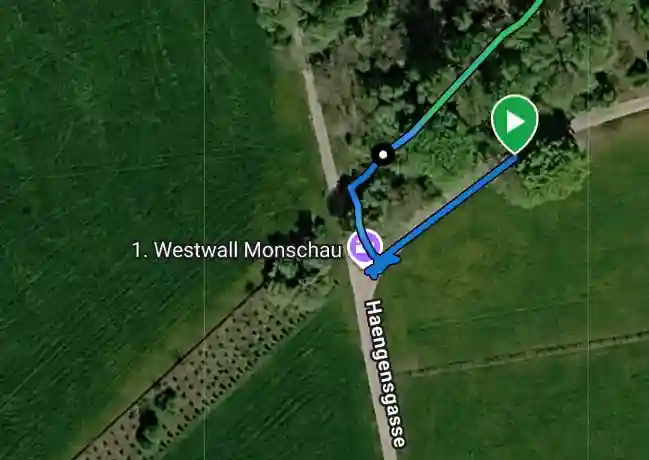
The welcome party at the bus station commenced with a five-minute overhead ruck hold, during which Christian introduced himself to the group, provided some historical context and also how he ended up being the Cadre for the event. Next we did a couple front ruck lunges - as far as I can remember, we did 78 lunges to honor the 78th infantry division. Cadre had prepared two sandbags for the four of us - one 40-pound sandbag and one 60-pound sandbag, each weighed to the gram - so cheating was out of the question.
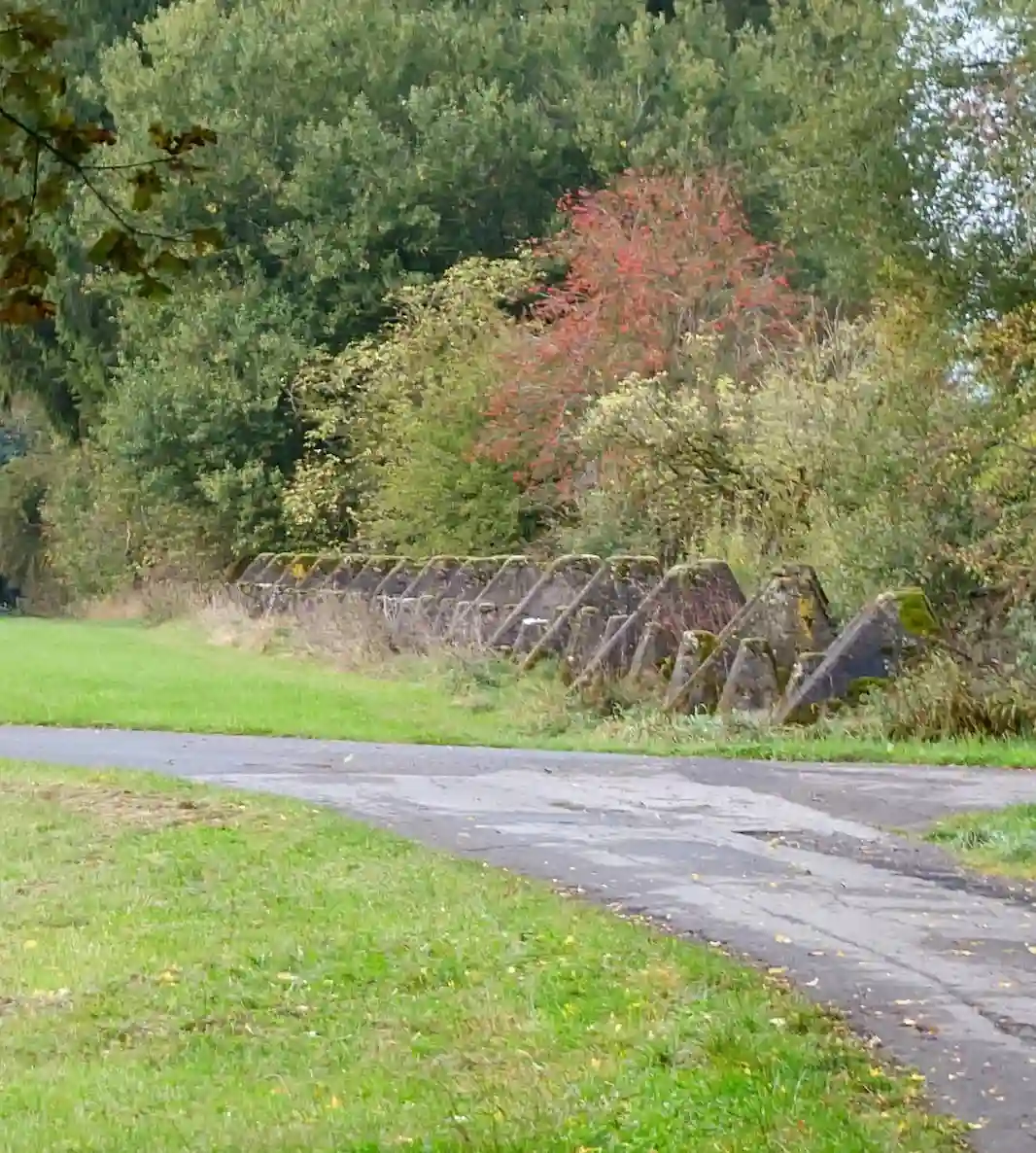
After the introductory session, we headed west and then north, quickly reaching the Westwall, a series of fortified structures buried deep in the ground and designed as anti-tank obstacles. As we approached the pyramid-like concrete barriers, Christian instructed us to bear-crawl for several dozen yards along the path while dragging the two sandbags. The exercise gave us a small taste of how soldiers moved equipment for hours on end under the constant threat of enemy fire.
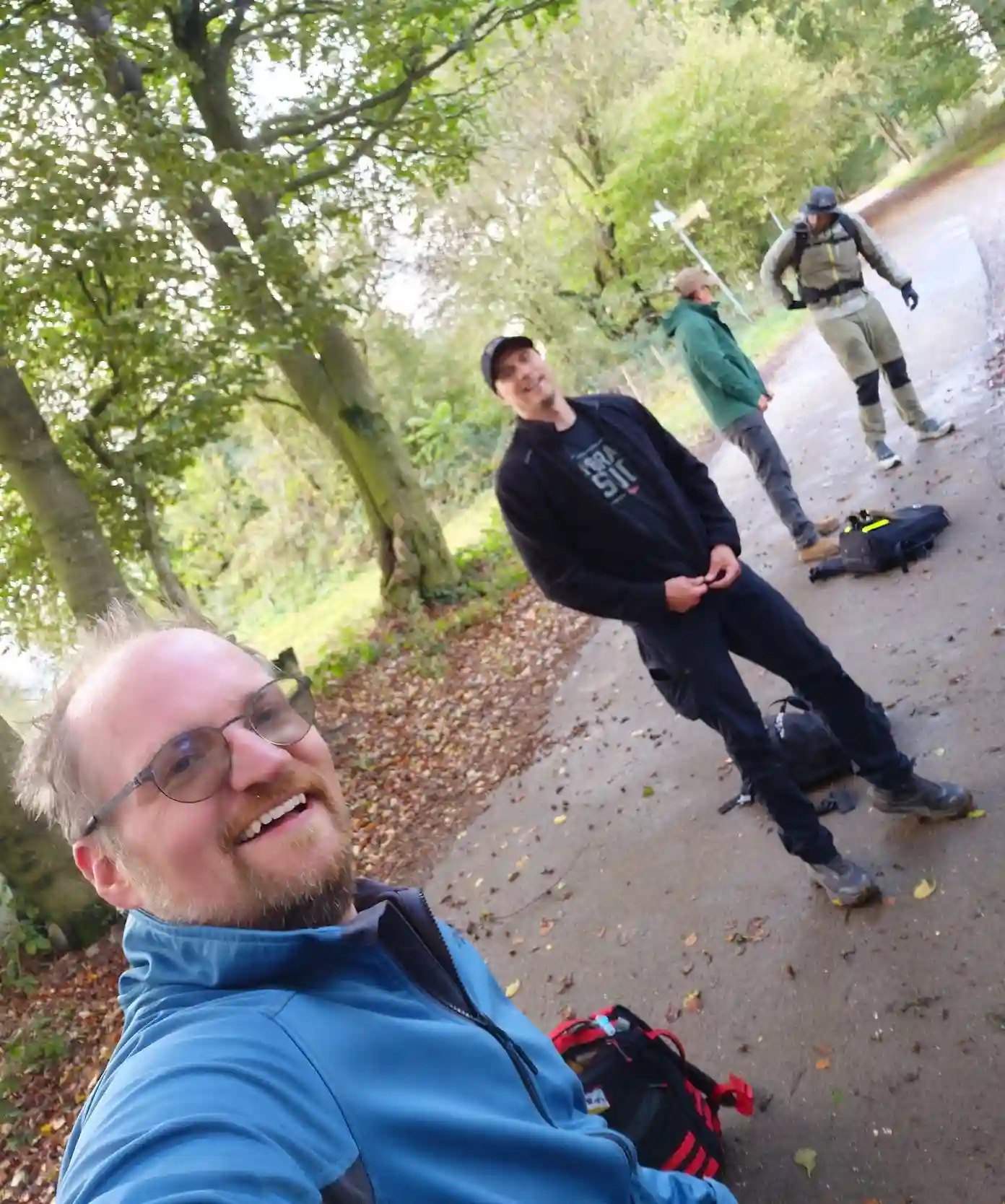
Afterwards, we rucked for another 15 minutes to a nearby crossing, where we completed our first workout: four sets of 20 burpees, 30 four-count mountain climbers, 40 four-count flutter kicks, and 50 ruck twists. After the first round, it felt nearly impossible to complete three more, but we dug deep, sucked it up, and pushed through. There was a group of people or two, walking their dogs or going for a run, passing us by and probably wondering what on earth we were doing there.
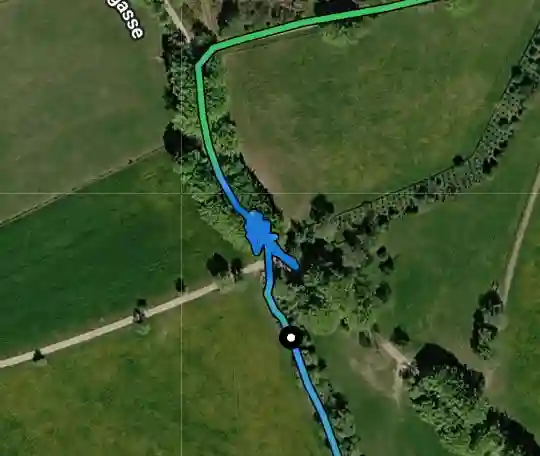
Following the workout, we continued rucking along the Kall, a local stream, taking turns carrying the sandbags.
Sisyphus
It didn’t take long, about 20 minutes, before we reached the next spot for another evolution.
Near a parking lot and a grilling hut stands the memorial to Technical Sergeant Harold E. Miller, who suffered machine-gun wounds and eventually died near the village of Bickerath. Our ordeal was to farmer-carry our rucks and sandbags in teams of two for 45 minutes - eventually, we managed about eight rounds, tracing figure eights on our Garmins. It reminded Axel and me of Sisyphus, a Greek mythological character condemned to repeat the same meaningless task of pushing a boulder up a hill, only for it to roll back down each time (actually, it reminded us of the punishing Sisyphus challenge from the Munich Tough event a year prior).
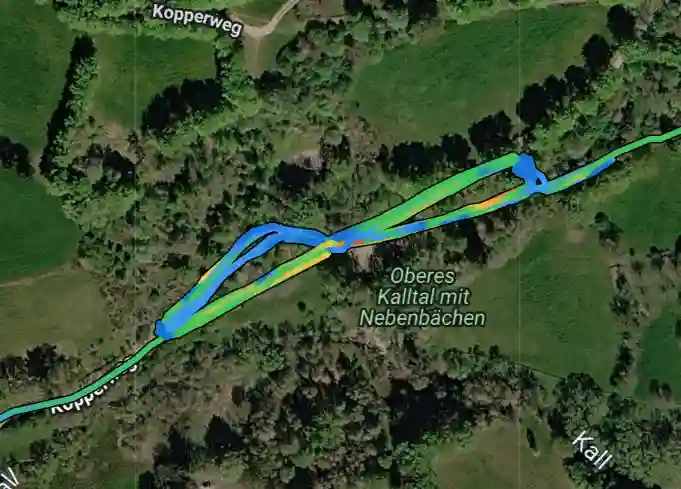
A short but steep incline, in particular, drained the energy from my body, while carrying 40 pounds of weight in each hand. It felt like my Rucker was heavier than the others’ - probably, it was just my imagination, but I couldn’t help but feel that the others’ rucks were lighter. I rationalized that this was the case because of the extra jacket and the full water bladder I’d packed before leaving the hotel. After each round, the teams switched sandbags and within our team, we switched weights (rucks vs. sandbags) at selected locations. My ruck handles kept twisting in my hands, making the carries particularly annoying.
I had teamed up with Christian, who I figured was a well-rounded, friendly, and fun guy. He had spent 12 years in the German army as an officer and had some stories to tell. Also, he’s a tall guy with impressive stamina - especially toward the end of the event, he did a lot of the heavy carrying. Our team started off strong - the others took it slow at the beginning, but eventually, Alex and Marcel overtook us and won the little competition! Lucky them, they got to decide how long our break would be: They opted for 10 minutes instead of 5, and we didn’t mind.
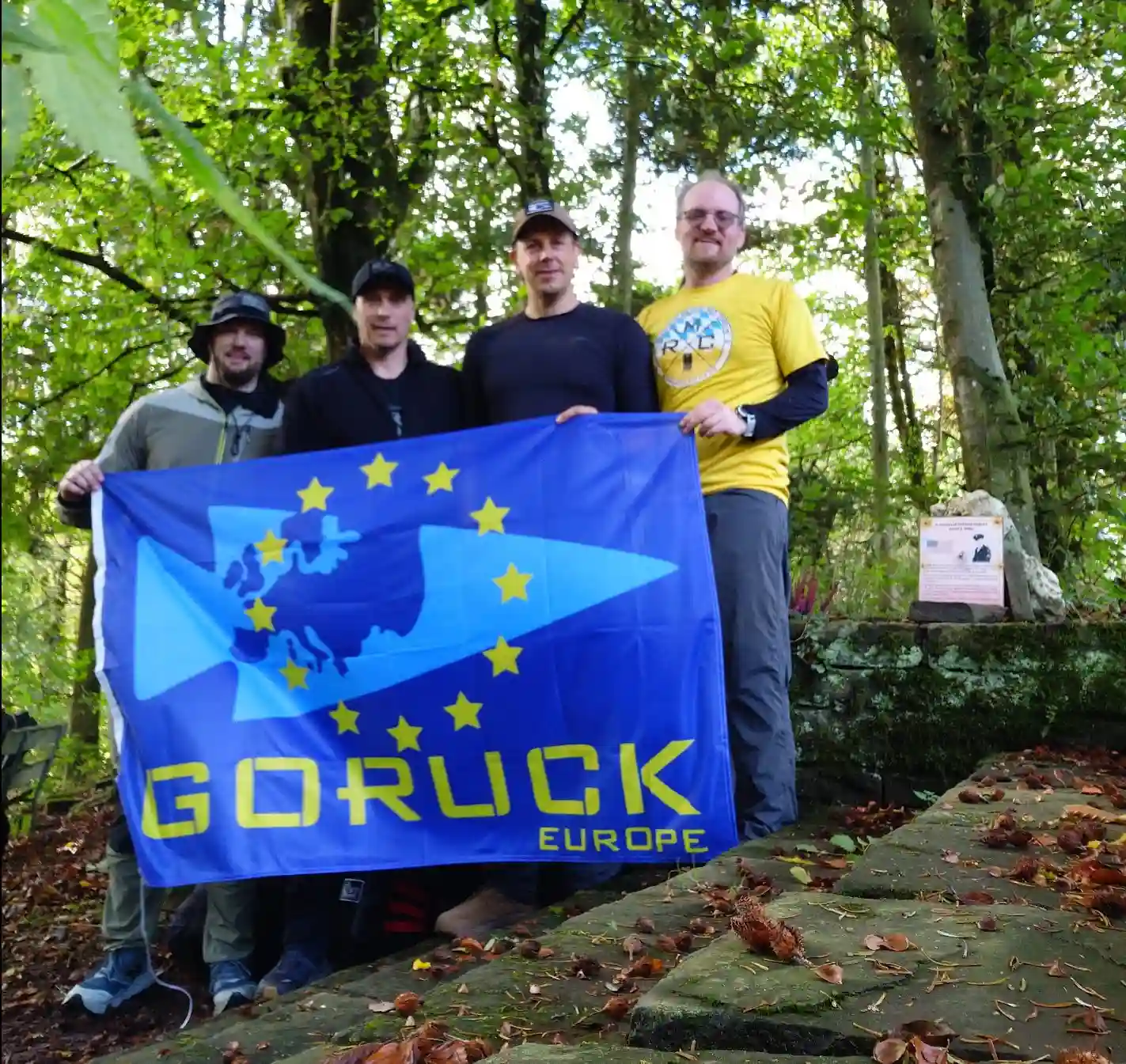
Rucking to Hürtgenwald
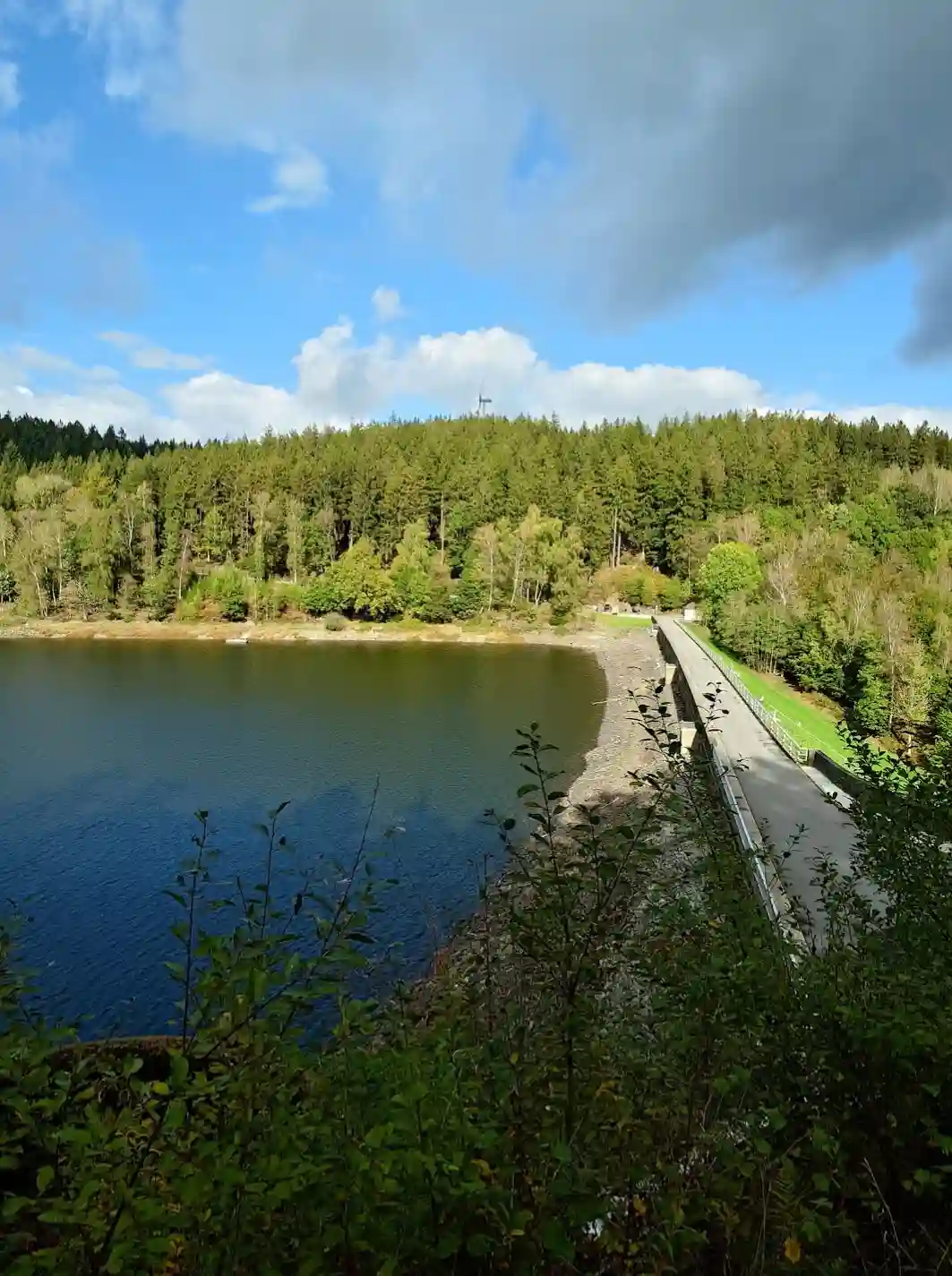
Next, we rucked northward for about two hours, passing the Kalltal Dam. Supposedly, the Nazis had considered demolishing dams to hinder the Allies’ advance toward the Ruhrgebiet. Eventually, we reached an area with several wind turbines. Christian knew quite a bit about them, as he had consulted for an energy company in his civilian job.
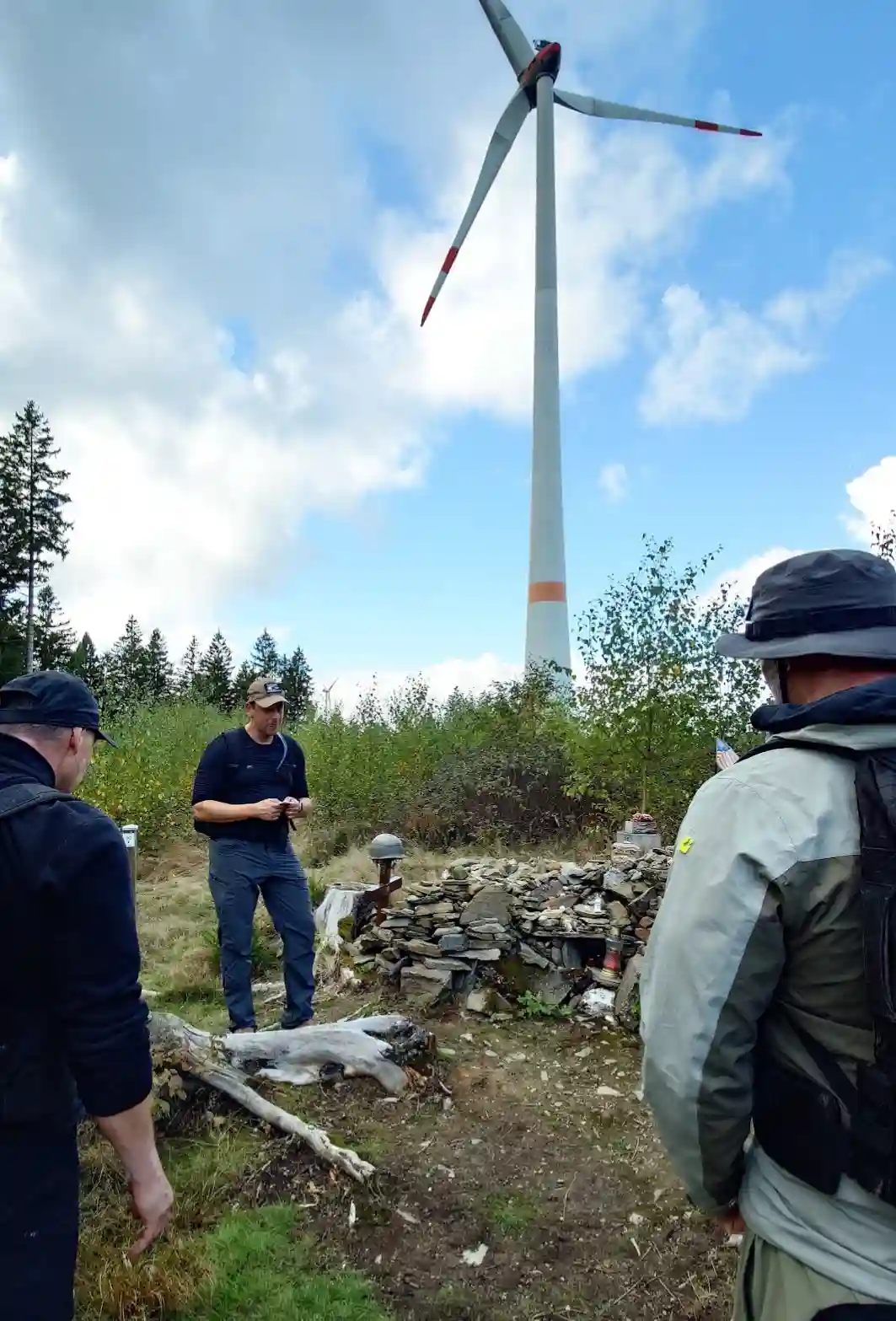
In April 2000, 56 years after his assault team suffered heavy casualties in a minefield while attempting to capture German concrete bunkers, the remains of CPL Robert T. Cahow were found in the forests of Hürtgenwald during a survey of the area prior to the installation of wind turbines there. We spent a minute of silence to commemorate those who had fallen during the Second World War and then continued toward one of the wind turbines.
At the foot of the towering wind turbine, Christian connected the two sandbags with a combined weight of 100 pounds and marked out a track at the base of the wind turbine along which the sandbags would be dragged. We took turns dragging the sandbags while the rest of us carried the rucks, including the extra ruck belonging to the person dragging. Between dragging sessions, we performed overhead presses. After a couple of rounds, my arms became tired, so I suggested switching to ruck rows. Everyone agreed, and that’s how we continued.
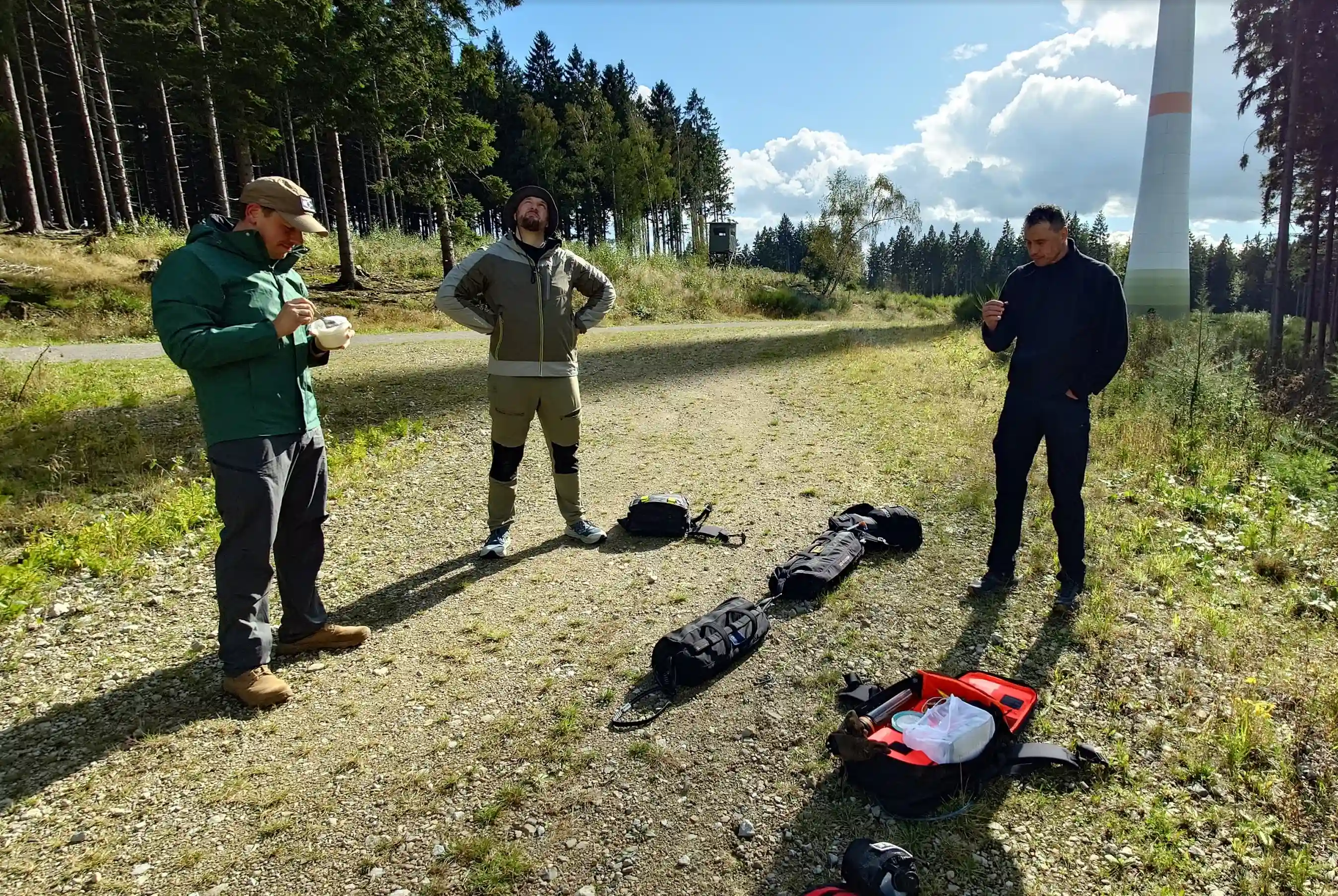
Drag, push, carry; drag, pull, carry; and so it went. We spent around an hour going back and forth, making about 16 trips in total, to get a feel for what it meant to drag a wounded comrade across the ground when necessary. By then, the sun had come out. The weather oscillated between windy and overcast conditions and sunny and warm weather. I put on my boonie hat to protect myself from sunburn. After the workout, we had some water and snacks before heading out to the next challenge.
Trees, bunkers, and everyday necessities
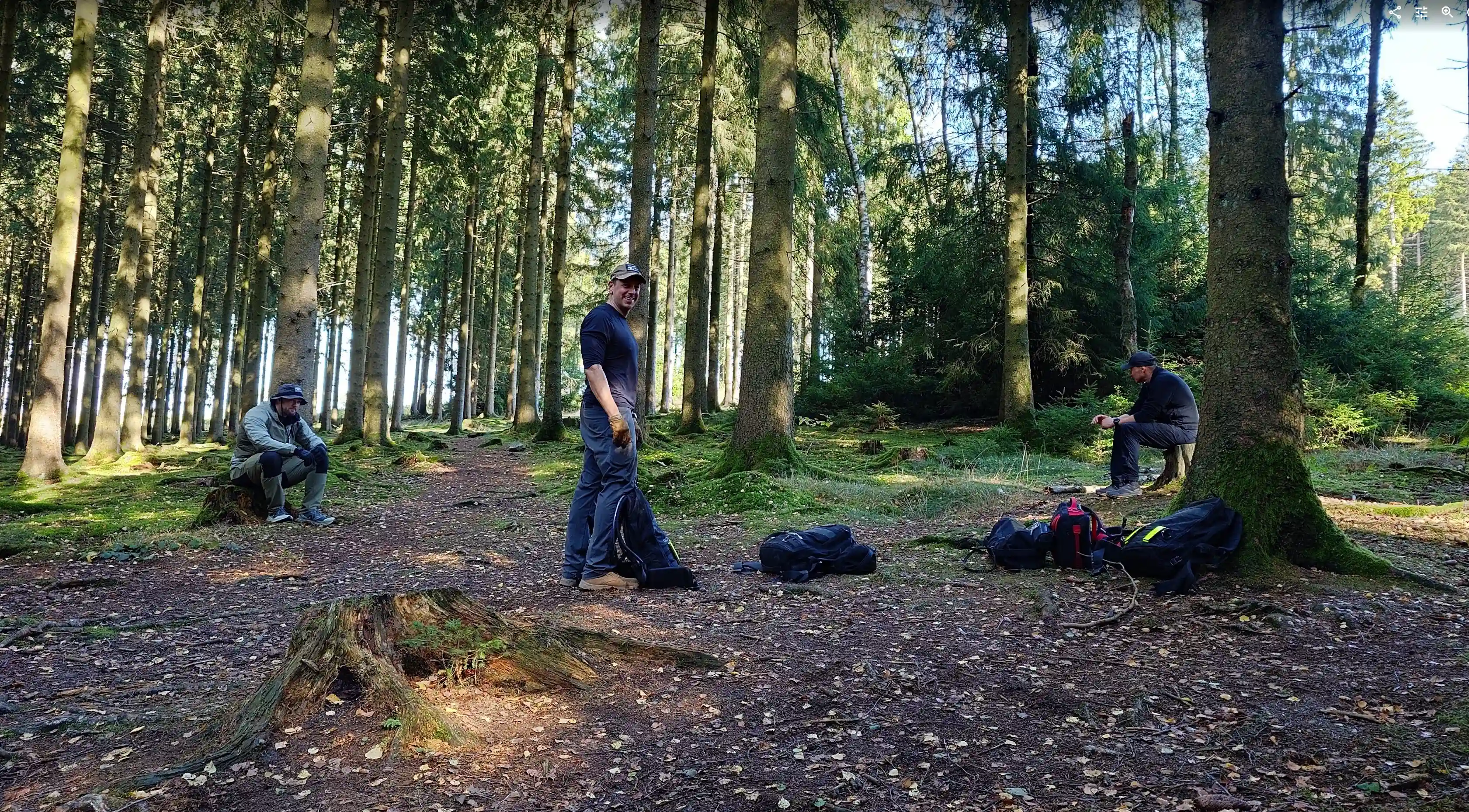
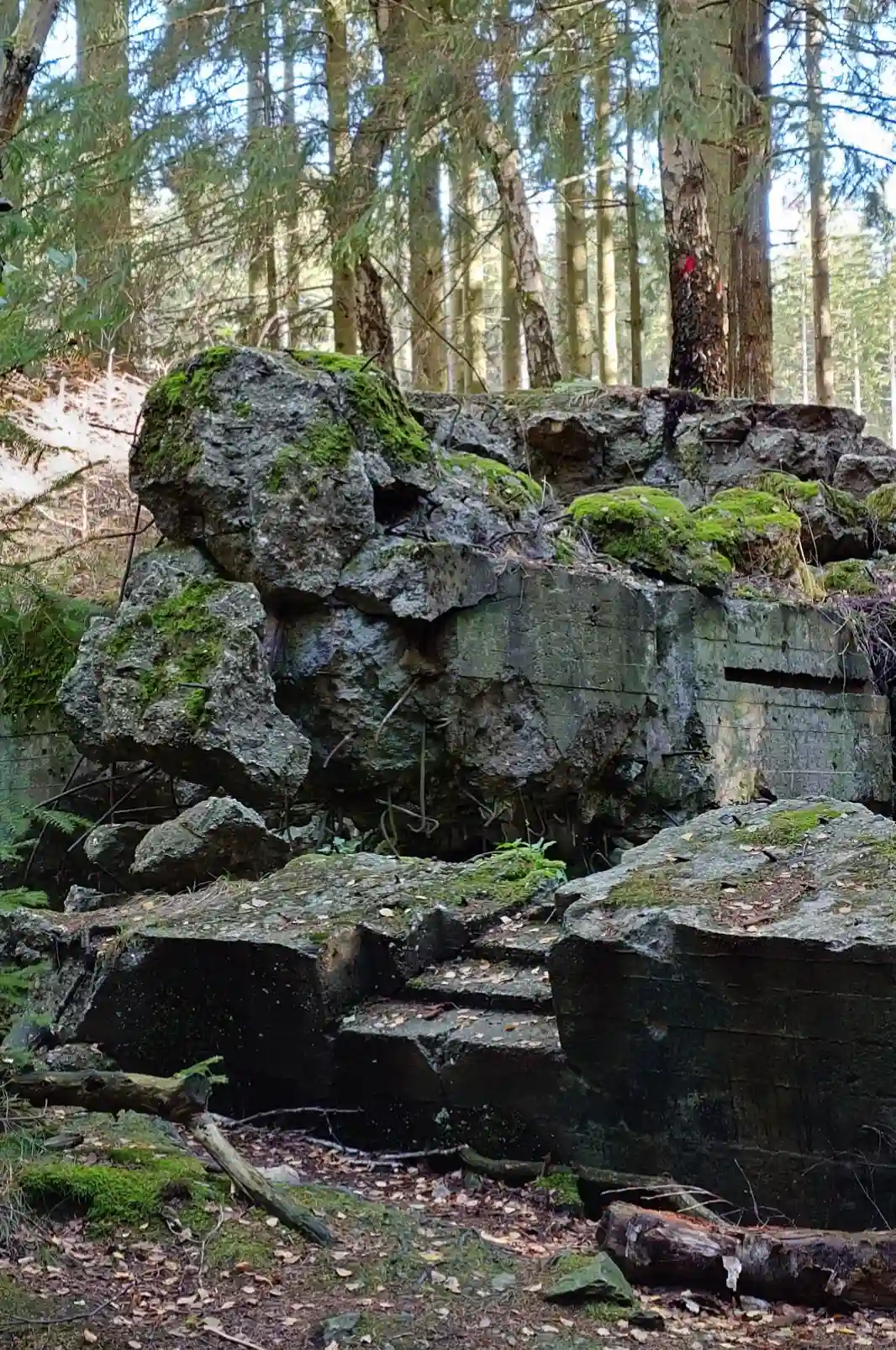
After a couple of minutes, we found ourselves inspecting a bunker hidden in the nearby woods. Christian instructed us to watch out for munitions, which occasionally surface due to erosion.
The bunkers are surprisingly well camouflaged in the forest, but inside they resemble caves, even 80 years after the war. We took some time to explore the bunker and enjoy a few quiet moments in the woods.
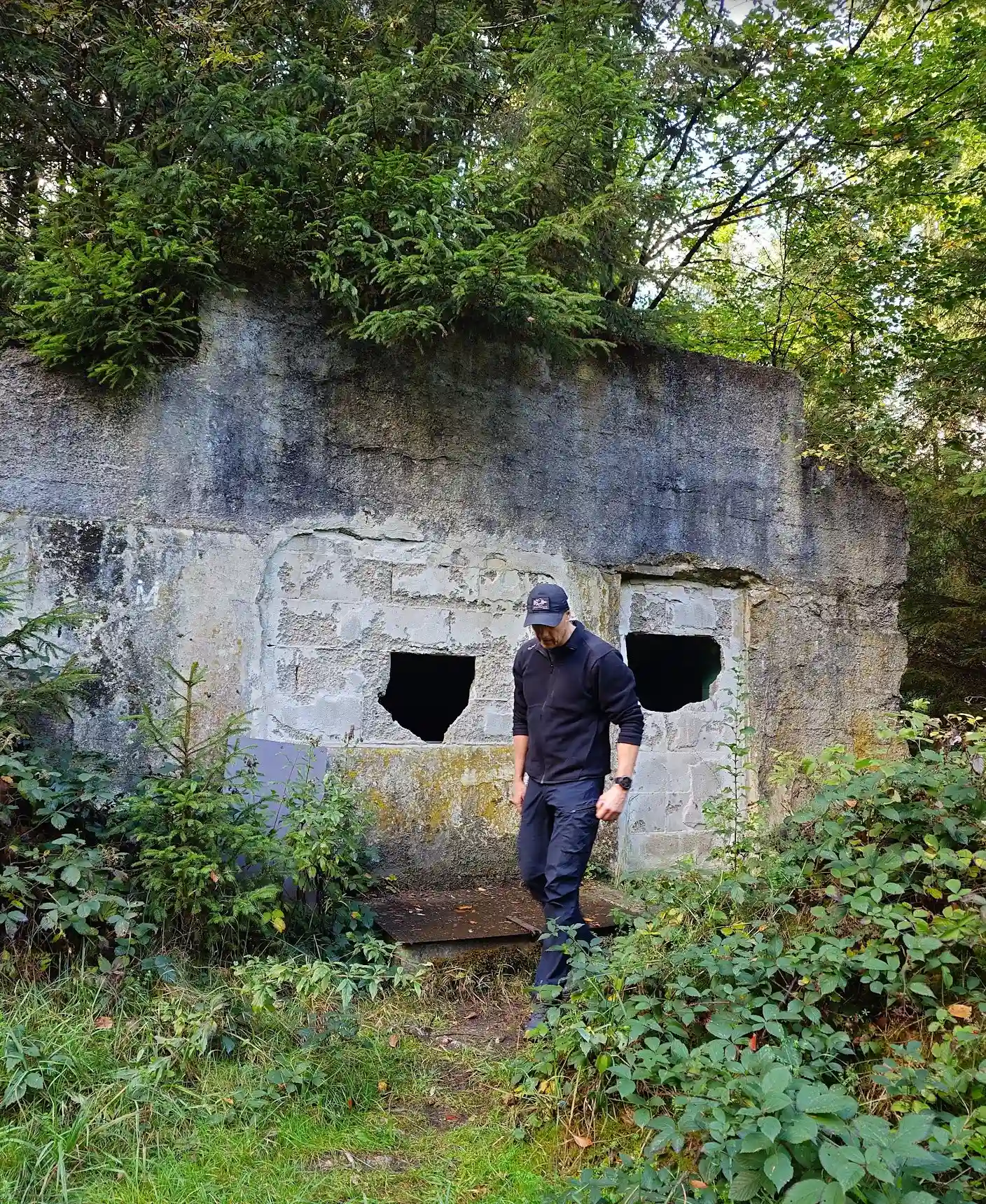
After taking a moderate break, we continued on and rucked for a while longer. Christian led us to a particular bunker, which was actually a water bunker. Built like a Roman cistern, it was intended to supply nearby soldiers with water. Inside, it looked almost pristine, with most of its turquoise tiles still intact. We were then given another challenge. We were to perform a farmer’s carry with the two sandbags in teams of two while maintaining absolute silence: no talking, no whining, no moaning. The goal was to give us a sense of what U.S. soldiers might have experienced many years ago in a strange forest within a hostile country.
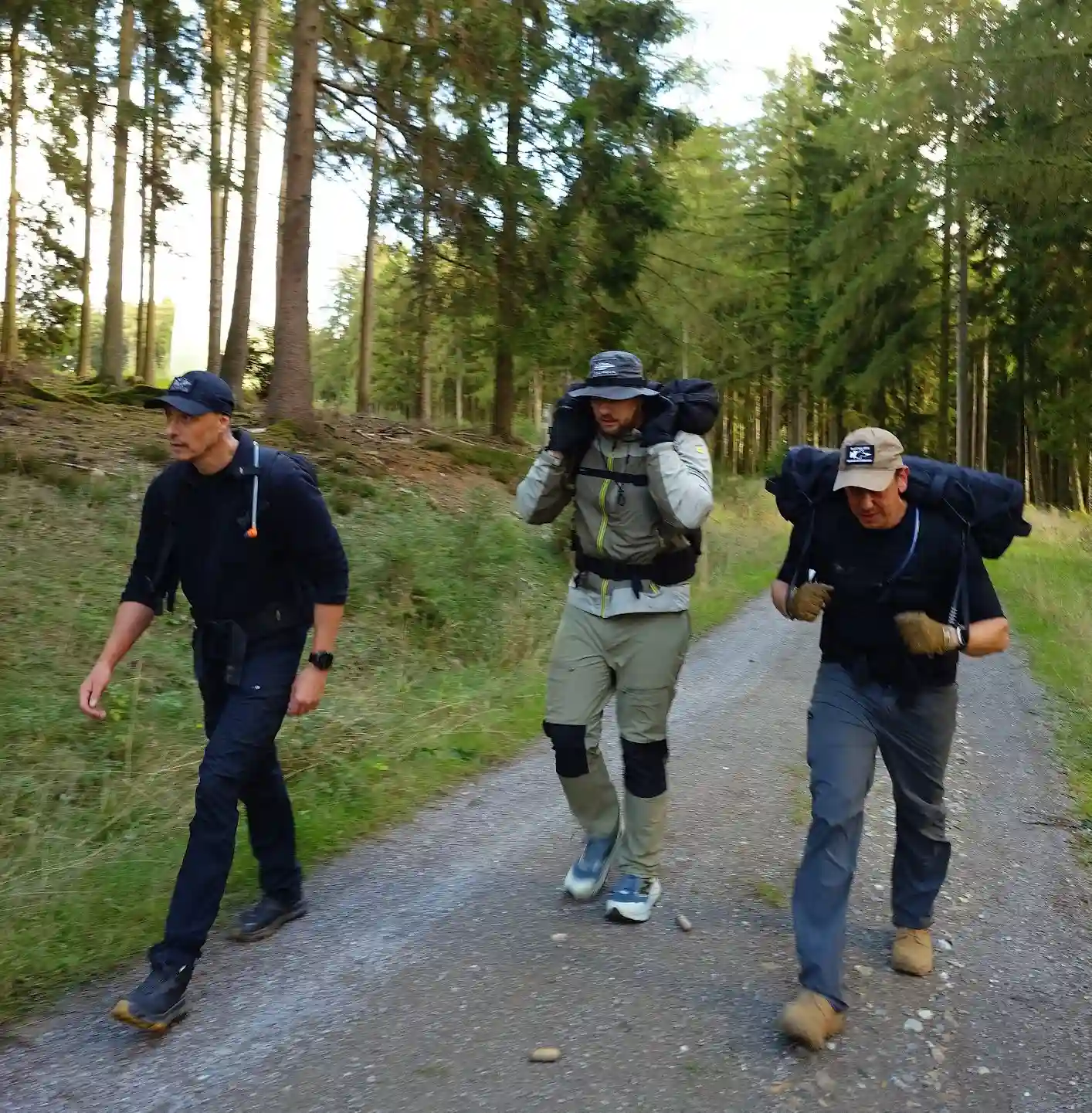
Marcel and I were fortunate enough to get the lighter sandbag. After a while, however, our hands began to give out, so we switched sides regularly. The others also struggled with their even heavier sandbag and changed sides every few hundred meters or so. I started to feel some pain in my collarbone and found that carrying the sandbag on my left side was more comfortable. Some hikers and bikers greeted us or expressed their amazement at seeing us carry heavy loads through the forest - one of them shouted to his friend, something along the lines of “Do you know anyone who would do this kind of thing?” We did not reply but remained focused on our “mission”.
At some point, we arrived at a fork in the forest. Christian pulled a map and compass from his Rucker and told us that he would not be available for navigation until we reached a designated waypoint. He handed us the map, which contained several coordinates in a format unfamiliar to us. So at first, we had no idea how to use them. After some discussion and a brief explanation from Christian, we were able to identify the destination. By studying the map and brainstorming together, we also determined our current location and planned a route to the indicated waypoint.
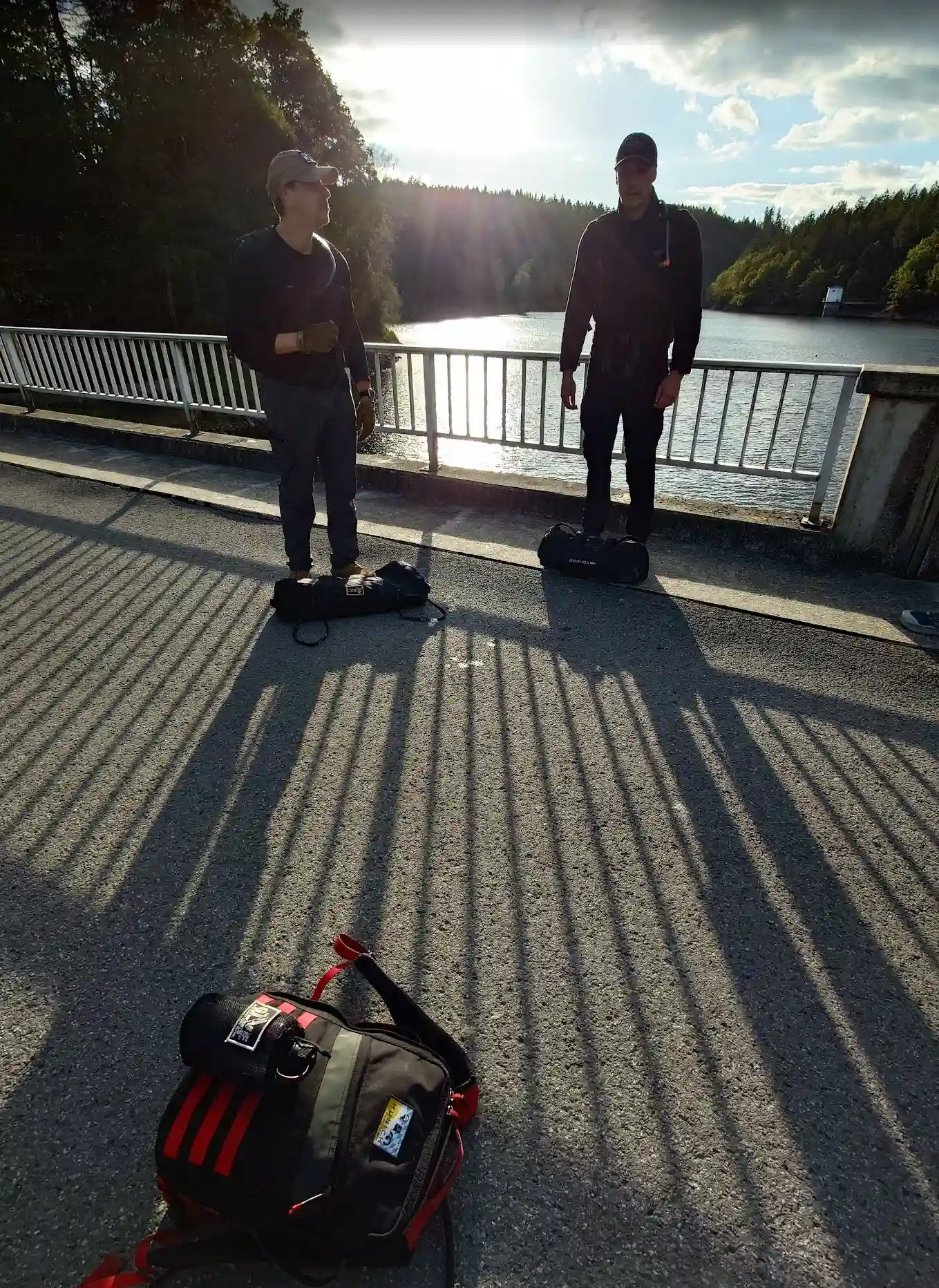
And off we went. I suggested taking an off-road path through the trees, but in the end, we decided to play it safe. The destination turned out to be the dam we had visited earlier, where our next and final workout awaited us: a deck of cards. Fortunately, Christian had cut the deck in half. It also contained jokers. Whenever a joker was drawn, we had to grab all our gear and move about 30 to 40 yards across the dam. The suits represented different exercises, while the card values determined the required number of repetitions. We performed burpees, flutter kicks, air squats, and ruck thrusters on the dam as the sun slowly descended toward the horizon.
The final stretch
About eight hours had passed since we started the event. The Cadre announced that this would be the final workout and that we were on our way back to the starting point. We were all tired, I suppose, but the Tough is called a Tough for a reason. So we pressed on, despite the steep ascents that still lay ahead while carrying our loads.
Christian ended up carrying more weight during the final miles. Axel kept chugging along like a machine, although he needed breaks as well. Marcel was experiencing some back pain and was advised not to take any risks. As for me, I found it increasingly difficult to maintain the pace, and I gradually fell farther behind.
We continued trudging through the woods and eventually found ourselves on a path that had been cleared by heavy forestry equipment. The altered terrain had confused Christian, who had scouted the route beforehand, and the path was muddy as hell. Eventually, we emerged from the forest and made our way back toward Simmerath.
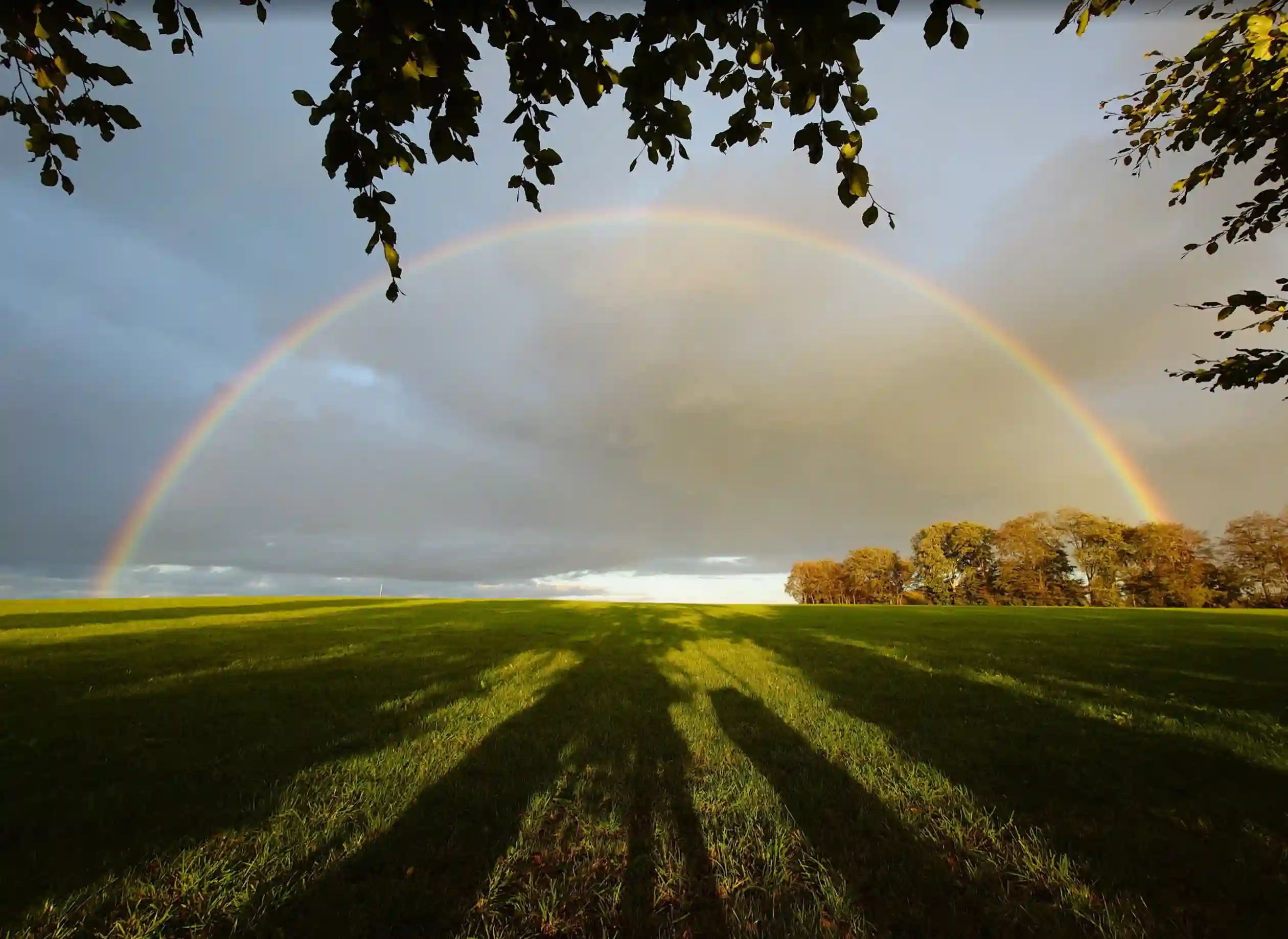
During the last couple of kilometers, the sun began to set and a light rain shower moved through the area, rewarding us with a beautiful sunset and a rainbow. Finally, we reached civilization again. At one point, while carrying the 60-pound sandbag, my foot started to hurt, and I could do little more than limp along behind the others. I had been wearing barefoot shoes, so I suspect I had overextended myself somewhat during the event. Eventually, I handed the sandbag off to the others.
With only 600 meters left to go, we took a short break on a bench. The pain in my foot eased somewhat, and we continued on for the final few minutes of the Tough.
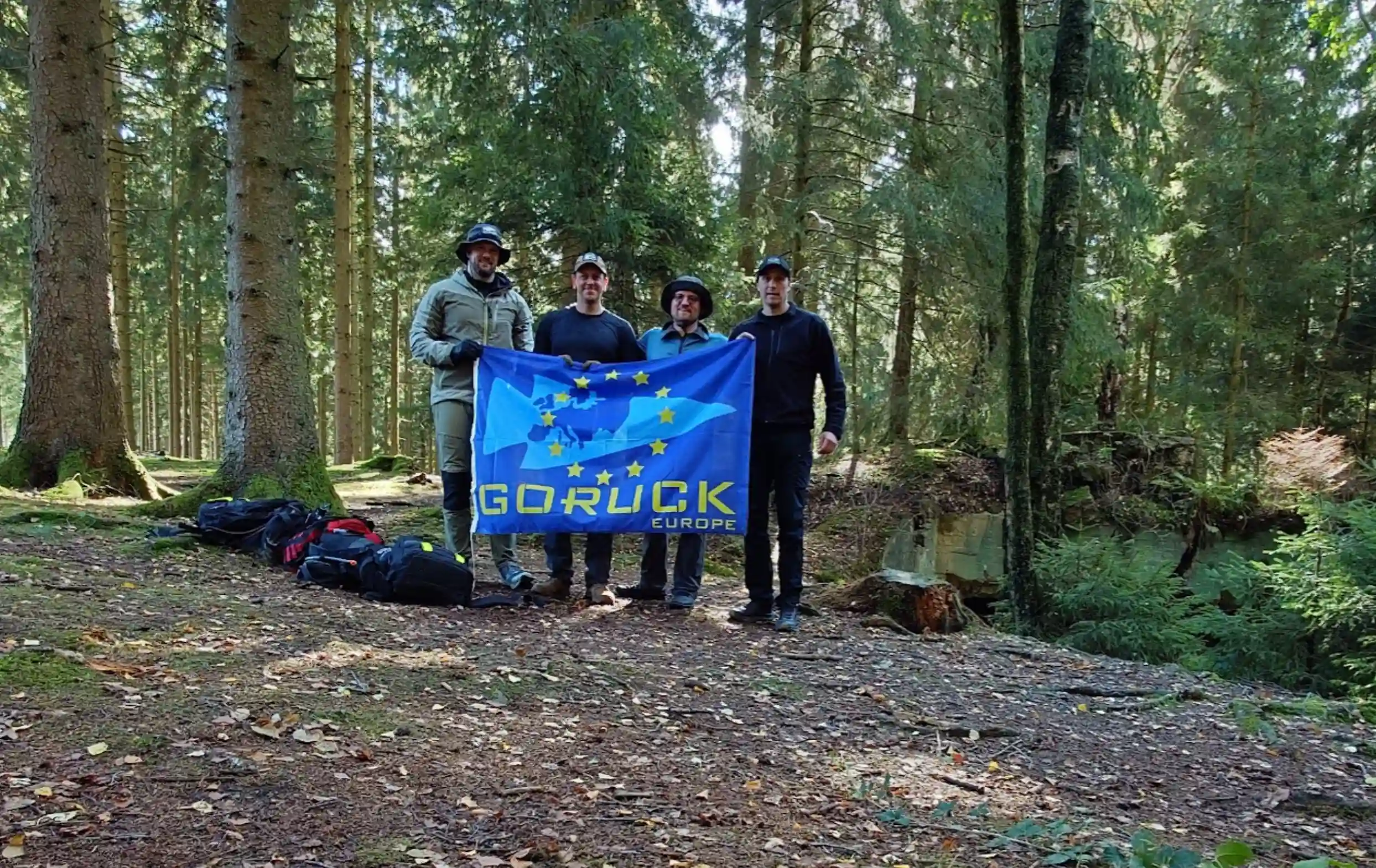
Finally, we arrived back at the parking lot where we had left our cars ten hours and roughly 33 kilometers earlier. We gathered for the patch ceremony, during which Christian gave a brief speech. He reminded us that, in some small way, we had experienced a fraction of what the soldiers had endured 80 years earlier and encouraged us to keep that in mind as we received our patches.
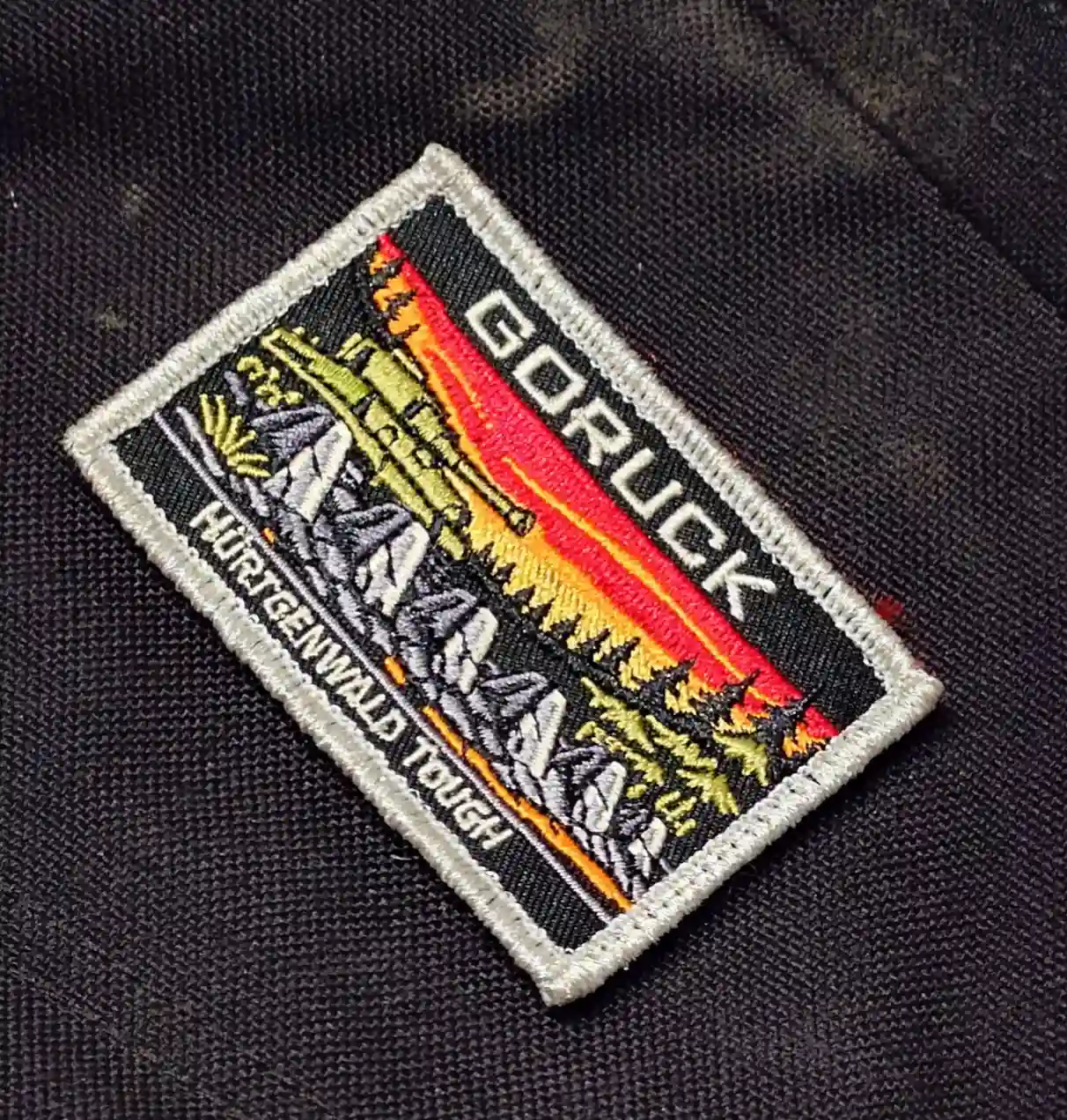
We all felt happy, relieved, and proud to have made it through the Tough, and to have made some friends along the way.